
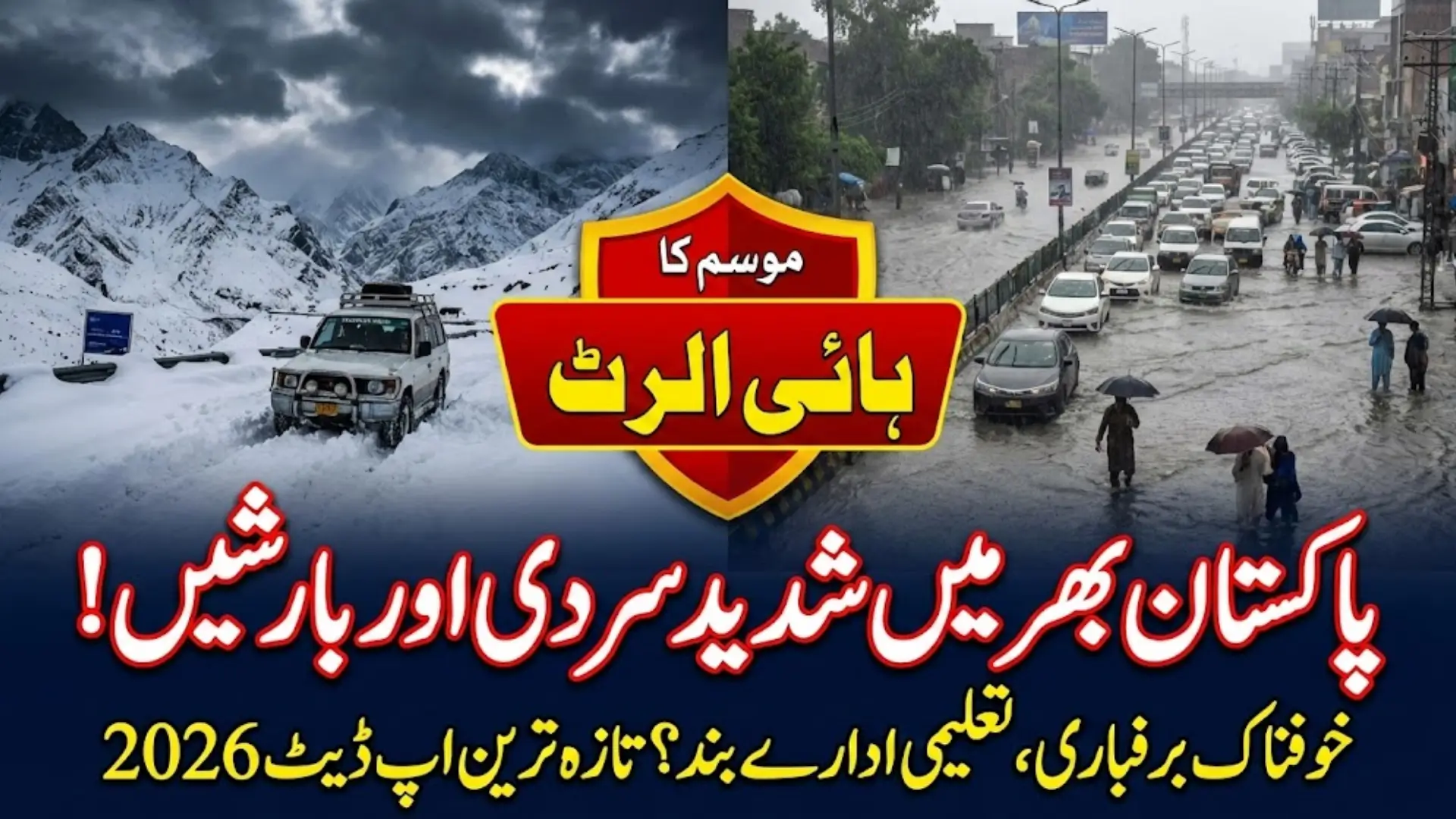
Today Weather Latest Update 2026
Pakistan is going through a noticeable winter shift as weather conditions change rapidly across different regions. From the plains of Punjab to the mountains of Gilgit-Baltistan, people are feeling the impact of colder temperatures, cloudy skies, rain, and snowfall. Over the last few days, the chill in the air has become sharper, especially during mornings and nights, forcing families to adjust their daily routines.

As someone closely observing these developments and following official weather briefings, it is clear that this weather system is not limited to one area. Instead, it is affecting the entire country in different ways. This detailed update explains the situation in clear and simple language so that every Pakistani, whether living in a city or a rural area, can understand what to expect and how to stay prepared.
You Can Also Read: Ramadan Relief Approved: CM Maryam Nawaz
Current Weather Situation Across Pakistan
At present, most parts of Pakistan are experiencing cloudy weather with cold air spreading from the north towards central and southern regions. In cities, people are noticing damp conditions, reduced sunshine, and a persistent chill that remains even during the daytime. In northern areas, temperatures are hovering close to the freezing point, making daily life more challenging.
The cold is not only limited to temperature readings but is also intensified by moisture in the air. High humidity levels are making the weather feel colder than it actually is. This is why many people feel the need to wear extra layers even indoors, especially during early morning and late evening hours.
Current conditions being observed include:
- Widespread cloud cover across provinces
- Cold mornings and evenings in both urban and rural areas
- Light rain in plains and snowfall in hilly regions
You Can Also Read: PTA 5G Spectrum Auction 2026: 80% of Mobile Phones
Atmospheric Changes Driving the Current Spell
The primary reason behind this sudden change is an active westerly weather system entering Pakistan. Such systems are common during winter, but the current one is relatively stronger. It carries cold air and moisture, which leads to rainfall in low-lying areas and snowfall in mountainous regions.
Because this system is slow-moving, its effects are expected to last several days. Continuous clouds are blocking sunlight, which prevents temperatures from rising during the day. As a result, the cold spell feels longer and more intense, especially for people living in poorly insulated homes.
Key effects of this weather system include:
- Continuous low temperatures throughout the day
- Increased chances of rain and snow
- Prolonged winter conditions across the country
You Can Also Read: Samsung Galaxy A57 Design Reveal Expected Launch
Temperature, Wind, and Moisture Overview
Temperatures vary from region to region, but overall weather conditions remain cold. In northern areas, night temperatures are close to or below freezing, while in central Pakistan, daytime temperatures remain unusually low for this time of year. Southern regions are also cooler than normal due to cloud cover and cold winds.
Wind speeds are generally mild, but cold winds from the north are increasing the chill factor. High humidity levels add to discomfort, especially in cities where moisture remains trapped between buildings, making the cold feel heavier and harder to escape.
Rainfall Outlook for Urban and Agricultural Regions
Rain is expected in several urban areas, particularly in Punjab and parts of Sindh. For farmers, this rainfall is mostly positive, as it supports wheat crops and improves soil moisture during the critical growing season. Many agricultural experts consider this rain a natural boost for winter farming.
In cities, however, rain can create temporary problems. Water accumulation on roads, traffic congestion, and slow commuting are common issues during winter showers. Still, there is a positive side, as rain helps clear smog and dust, improving air quality.
Urban and agricultural impacts include:
- Improved conditions for wheat and seasonal crops
- Short-term traffic and drainage issues
- Reduction in smog levels in major cities
You Can Also Read: Newly-Designed Currency Notes Availability Date
Snowfall Expectations in High-Altitude Regions
High-altitude areas are expected to receive moderate to heavy snowfall. Regions such as Gilgit-Baltistan, upper Khyber Pakhtunkhwa, Azad Kashmir, Murree, and Galiyat are already experiencing cold conditions suitable for snowfall. Fresh snow is likely to further lower temperatures and affect mobility.
While snowfall enhances the beauty of these regions and attracts tourists, it also brings risks. Slippery roads, blocked highways, and delays in supplies are common during heavy snow. Tourists and locals alike are advised to stay cautious and follow official travel advisories.
Risk Zones and Safety Concerns
Certain regions are facing higher safety risks due to the combined effects of rain and snow. Balochistan, in particular, remains under alert due to the possibility of flash floods caused by heavy rainfall in some districts. Seasonal streams can overflow quickly, catching people off guard.
In mountainous areas, continuous rain and snowfall increase the risk of landslides. Residents living near slopes or narrow valleys should remain alert and avoid unnecessary movement during bad weather.
You Can Also Read: Fully Funded BS MS & PhD Scholarships in US Universities
Main safety concerns include:
- Landslides in hilly and mountainous regions
- Flash flooding in low-lying and coastal areas
- Damage to weak roads and infrastructure
Provincial Weather Impact Breakdown
Weather conditions are not the same across all provinces. Each region is experiencing this system differently based on geography and altitude. Understanding regional impacts helps people prepare better.
| Region | Weather Impact |
|---|---|
| Northern Areas | Heavy snowfall, freezing temperatures |
| Punjab | Rain, cold winds, cloudy skies |
| Sindh | Cooler weather, light drizzle in coastal areas |
| Balochistan | Rain with risk of flash floods |
Travel and Road Condition Advisory
Travel conditions are expected to remain challenging in the coming days. Mountain roads may become slippery due to snow, while highways in plains could be affected by rain and fog. Temporary road closures are possible if conditions worsen.
For daily commuters, rain may slow traffic but also improve visibility once smog clears. Travelers should check official updates before starting their journeys, especially when heading towards northern areas.
You Can Also Read: Sui Southern Gas Company Suspension
Travel advice for citizens:
- Avoid unnecessary travel to hilly regions
- Drive carefully during rain and fog
- Stay updated with road condition reports
Effects on Daily Life and Public Services
The cold wave has affected daily routines across Pakistan. In many areas, school timings have been adjusted to protect children from extreme morning cold. Demand for gas and electricity has increased significantly due to heating needs.
Health professionals are also reporting an increase in seasonal illnesses, such as flu, cough, and breathing problems. Elderly people and children are particularly vulnerable and should be kept warm.
Emergency Preparedness and Public Awareness
Preparedness is essential during extreme winter conditions. Simple preventive measures can help families stay safe and avoid emergencies. People are advised to rely on official information and avoid spreading rumors.
Important preparation steps include:
- Keeping warm clothing and blankets ready
- Using heaters safely with proper ventilation
- Staying informed through official weather updates
Official Support and Emergency Contacts
Government departments and emergency services are fully active during this weather spell. Citizens should not hesitate to contact relevant authorities in case of emergencies related to weather, health, or travel.
Emergency services remain available for:
- Medical and fire emergencies
- Flood and landslide response
- Road condition and traffic guidance
Weather Outlook for the Coming Days
Cold and unsettled weather is expected to continue for the next few days. Rain and snowfall will occur in phases, followed by gradual stabilization. Temperatures may slowly rise towards early February, but winter conditions will still dominate.
Citizens are advised to remain cautious, especially during night and early morning hours, and continue following official advisories.
Key Takeaway for Citizens
This winter weather system brings both positive and negative effects. While rain benefits agriculture and improves air quality, risks such as snowfall, landslides, and flooding cannot be ignored. Awareness and preparedness remain the best tools for staying safe.
Common Questions People Are Asking Today
Which cities are expected to receive rain today?
Several cities in Punjab, parts of Sindh, and western regions are likely to experience rainfall.
Is it safe to travel to northern areas right now?
Travel is possible but risky due to snowfall and slippery roads. Caution is strongly advised.
How long will this cold spell last?
Cold conditions are expected to persist for several days, easing gradually in early February 2026.
Where can people get reliable weather updates?
Official weather authorities and government advisories remain the most reliable sources