
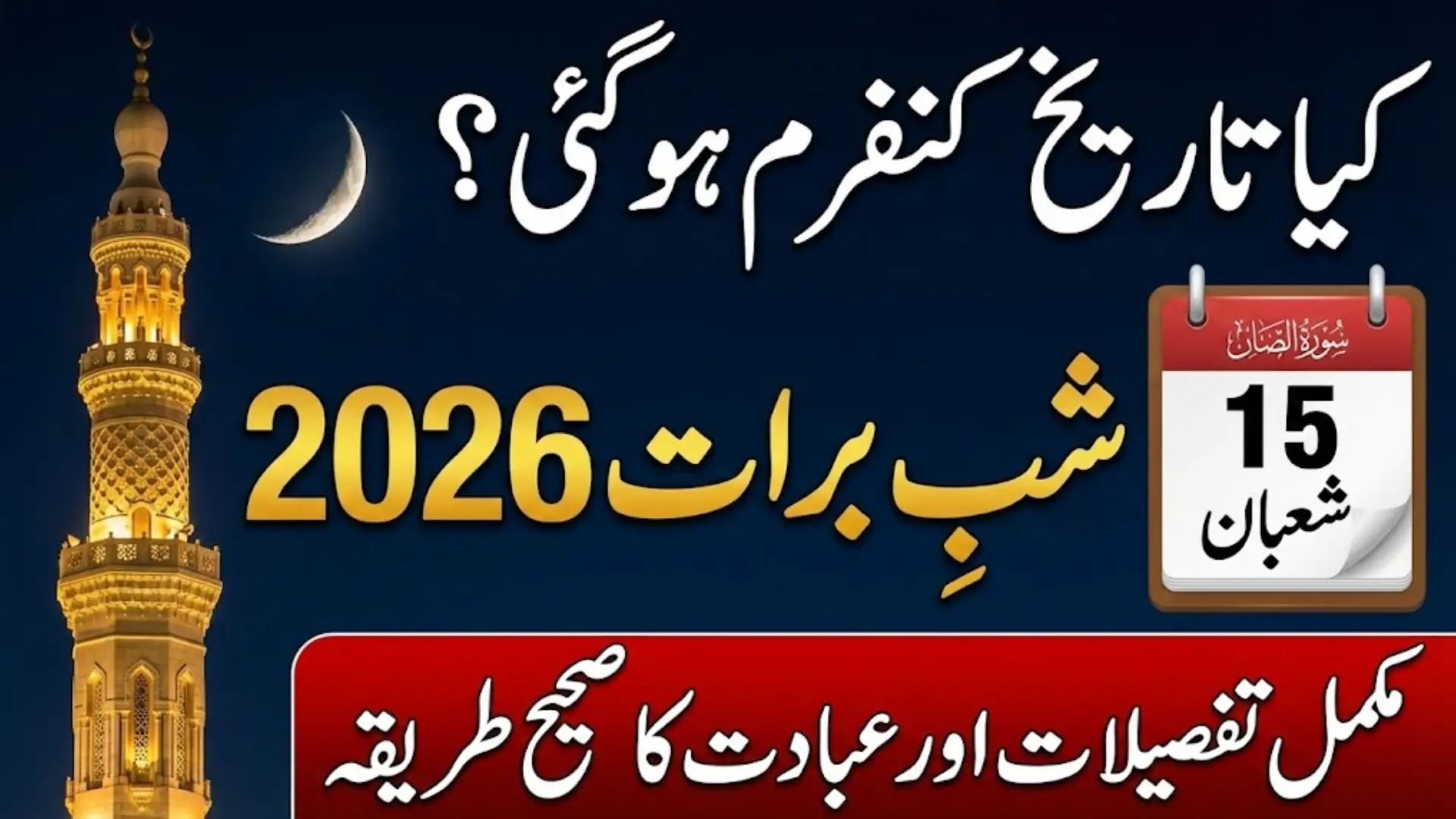
Shab E Barat 2026
Shab E Barat is one of those nights that almost every Muslim in Pakistan is familiar with, whether through family discussions, mosque announcements, or childhood memories. As the middle night of the Islamic month of Sha‘ban, it arrives quietly but carries deep emotional and spiritual meaning for many believers. People often associate it with forgiveness, remembrance, and preparation for Ramadan, which is only weeks away.
In 2026, interest around Shab E Barat is again high, especially online, where people search for the confirmed date, its meaning, and the correct way to observe it. This article explains Shab E Barat 2026 clearly and responsibly, separating religious understanding from cultural practice, so readers can observe the night with awareness rather than confusion.
You Can Also Read: BISP Payment Process Changed: SIM Holders
Introduction to Shab E Barat 2026
Shab E Barat, also known as the Night of Mid Shaban, falls on the 15th night of the eighth Islamic month. In Pakistan, this night is often discussed with a mix of faith, emotion, and tradition. Some people spend the night in prayer, while others focus on repentance and quiet reflection at home. Over the years, I have seen families treat it as a gentle reminder to slow down and think about life beyond daily routines.
What makes Shab E Barat special for many Muslims is not loud activity, but silence and intention. It is not linked to any festival-like celebration. Instead, it is seen as a night when believers turn inward, seek forgiveness from Allah, and mentally prepare themselves for the discipline and spirituality of Ramadan.
You Can Also Read: Gold Price Crosses Rs. 5 Lac Per Tola
Confirmed Calendar Date and Moon Sighting Impact
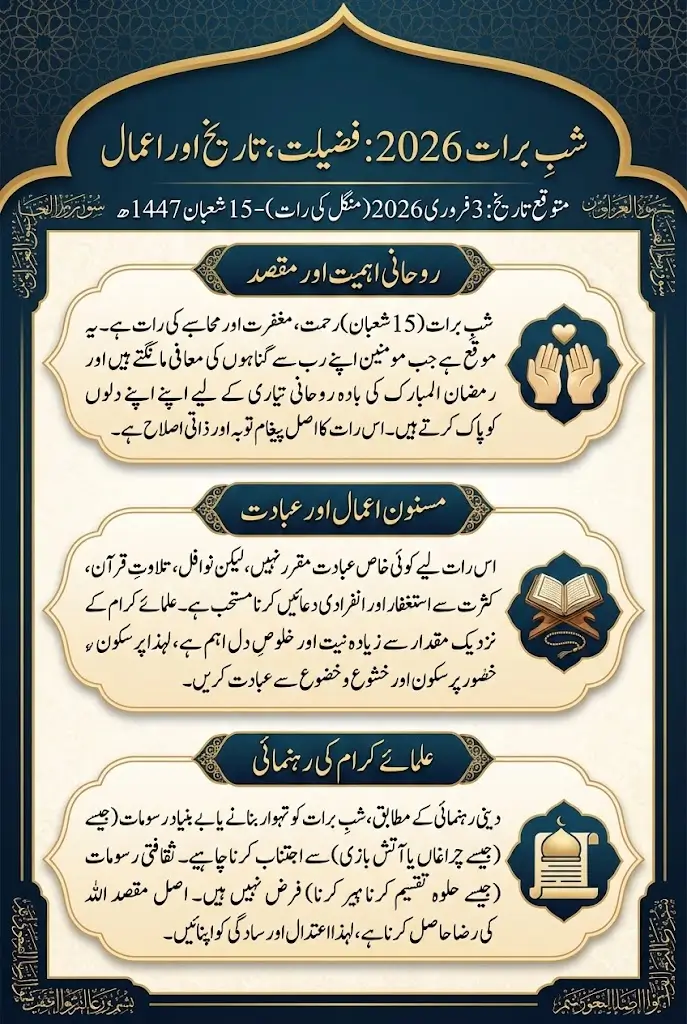
According to widely followed Hijri calendars, Shab E Barat 2026 is expected to be observed on the night of Tuesday, 3 February 2026, corresponding to 15 Sha‘ban 1447 AH. However, like all Islamic months, the final date depends on moon sighting, which means there can be a difference of one day in some regions.
In Pakistan, people usually rely on announcements made by the Ruet-e-Hilal Committee or respected local scholars. Over the years, I have noticed that confusion often comes from relying on social media rather than official sources. The best approach is patience and unity, as differences in moon sighting are a normal part of Islamic tradition.
You Can Also Read: Balochistan Launches Subsidized Electric Scooter
Expected Date Overview
| Islamic Date | Expected Gregorian Date | Day |
|---|---|---|
| 15 Sha‘ban 1447 AH | 3 February 2026 | Tuesday Night |
Historical Background of Mid Shaban
The month of Sha‘ban itself has historical importance in Islam. It was a month in which the Prophet Muhammad ﷺ increased voluntary worship and encouraged spiritual readiness before Ramadan. Over time, the middle night of Sha‘ban gained attention due to narrations that discuss Allah’s mercy and forgiveness during this period.
Islamic scholars throughout history have discussed this night with care. They acknowledged its virtue but also warned against turning it into a rigid religious event with fixed rituals. This balanced scholarly approach shows that Shab E Barat is meant to be meaningful, not complicated or burdensome for ordinary believers.
You Can Also Read: Silver Rate In Pakistan Today
Spiritual Significance of the Night
Shab E Barat is widely understood as a night of mercy, forgiveness, and accountability. Many Muslims believe it is a time when hearts soften and prayers feel more personal. In Pakistani households, elders often remind younger family members to use the night to reflect on their actions rather than focus only on outward rituals.
The spiritual message of the night revolves around self-improvement. It encourages believers to recognize their mistakes, ask Allah for forgiveness, and make sincere intentions to change for the better. This mindset is especially important because it prepares the soul for Ramadan, a month that requires discipline and sincerity.
You Can Also Read: BISP Taleemi Wazaif Verification Started for Oct–Dec 2026
Beliefs Associated With Destiny and Accountability
A common belief linked with Shab E Barat is that it is a night when matters related to life, death, and sustenance are presented before Allah. Scholars explain this belief in a way that emphasizes responsibility rather than fear. Allah’s knowledge is eternal, but humans are reminded that their actions and intentions still matter.
Instead of creating anxiety, this belief should encourage people to:
- Reflect on their lifestyle and behavior
- Improve relationships with others
- Seek forgiveness sincerely
- Avoid arrogance and neglect
The focus should always remain on hope and accountability, not superstition.
Common Acts of Worship Practiced by Muslims
In Pakistan, people observe Shab E Barat in various ways depending on family tradition and personal understanding. Some go to mosques, while others prefer praying at home. From what I have seen, the most peaceful observances are those that are simple and sincere.
Common practices include:
- Offering voluntary (Nafl) prayers
- Reciting the Quran calmly
- Making personal duas in one’s own language
- Remembering Allah through quiet zikr
Islamic scholars generally agree that no specific number of prayers or fixed formulas are required for this night.
You Can Also Read: New PTA Tax For Used iPhone 15 Series in Pakistan
Cultural Practices Across Different Regions
Cultural customs around Shab E Barat are especially visible in South Asia. In many areas of Pakistan, people visit graveyards, distribute food, or prepare sweets. These acts are usually done out of respect and remembrance rather than religious obligation.
However, it is important to understand that:
- Cultural practices are not compulsory
- Islam does not require food distribution on this night
- No one should be criticized for choosing simplicity
Religion allows cultural expression as long as it does not contradict Islamic principles.
Scholarly Perspectives and Responsible Observance
Mainstream scholars emphasize moderation when observing Shab E Barat. They caution against declaring any practice as obligatory when it is not clearly established. Over the years, scholars have consistently advised Muslims to focus on sincerity rather than quantity.
Responsible observance means:
- Avoiding unverified claims from social media
- Respecting different opinions
- Not turning the night into a public spectacle
- Keeping worship private and meaningful
Supplications and Personal Prayers
There is no single authentic dua prescribed exclusively for Shab E Barat. This is something many people do not realize. The beauty of this night lies in speaking to Allah directly, without memorized phrases or pressure.
People often use this time to pray for:
- Forgiveness of past mistakes
- Peace and stability in family life
- Health and رزق (sustenance)
- Strength to observe Ramadan properly
Guidance From Islamic Sources
The Quran repeatedly emphasizes Allah’s mercy, forgiveness, and acceptance of repentance. These themes align closely with the spirit of Shab E Barat. While some Hadith mention the virtue of Mid Shaban, scholars advise understanding them in context and not building exaggerated practices around them.
Islamic guidance consistently encourages balance, knowledge, and sincerity over emotional excess.
How to Observe Shab E Barat Mindfully in 2026
In today’s fast-paced world, mindful worship is more valuable than long routines done without focus. Even a short prayer offered with sincerity can be more meaningful than hours of distracted worship.
A mindful approach includes:
- Setting aside quiet personal time
- Avoiding unnecessary arguments
- Respecting different practices
- Keeping intentions pure
Final Thoughts on Shab E Barat 2026
Shab E Barat 2026 should be seen as an opportunity rather than an obligation. It is a night that invites reflection, forgiveness, and spiritual readiness before Ramadan. In Pakistan, where religion and culture are deeply connected, understanding this balance is essential.
When observed with knowledge, simplicity, and sincerity, Shab E Barat becomes a peaceful pause in life—a reminder that change begins within the heart.