
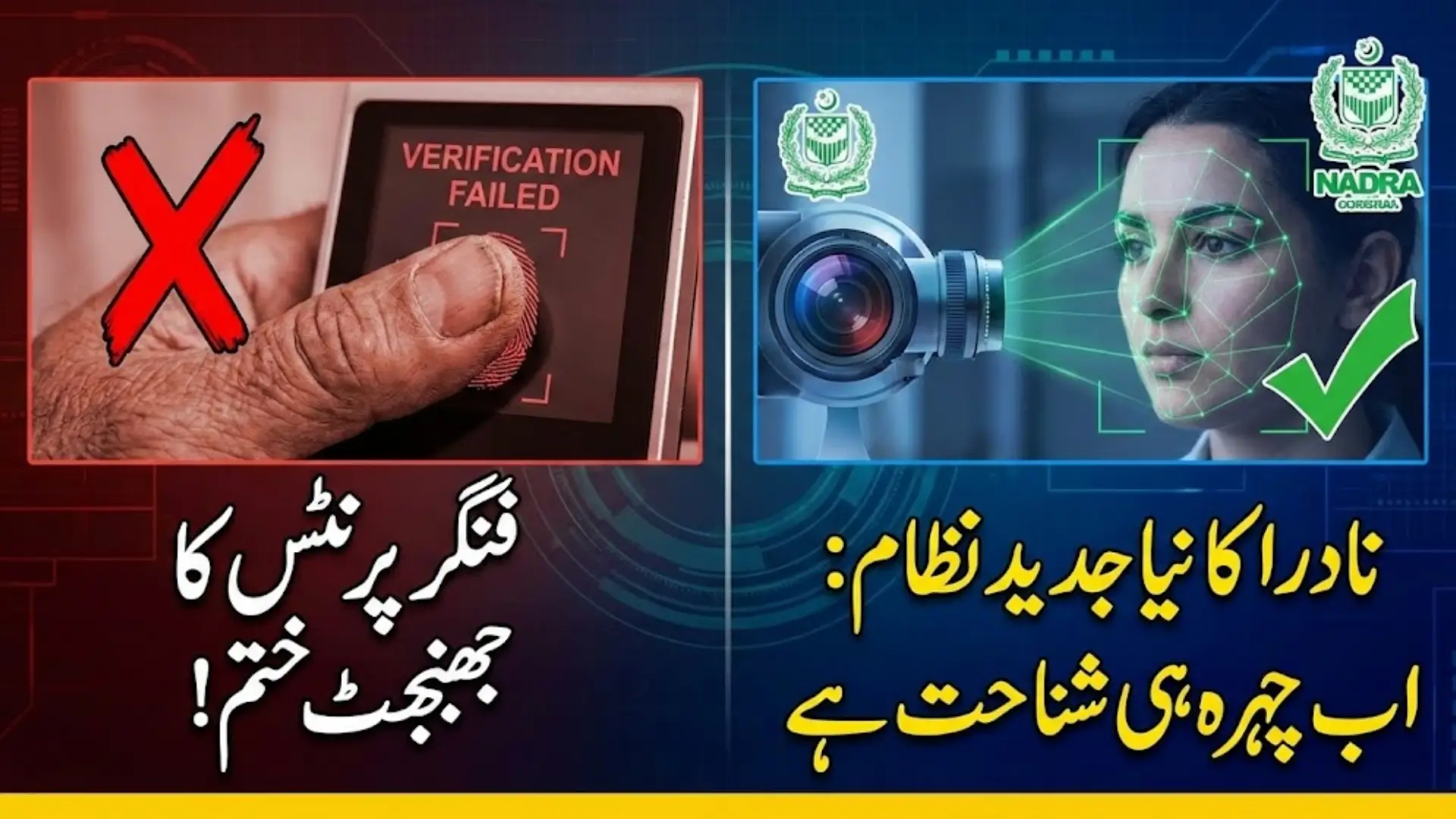
NADRA Introduces Facial Recognition Biometric System
NADRA Introduces Facial Recognition Biometric System For millions of Pakistani citizens, fingerprint verification has long been a source of stress rather than convenience. Anyone who has visited a NADRA registration center knows the frustration of repeated biometric failures, especially for elderly people and daily wage workers. NADRA’s decision to introduce a facial recognition–based biometric system marks a major shift in how identity verification will work in Pakistan.
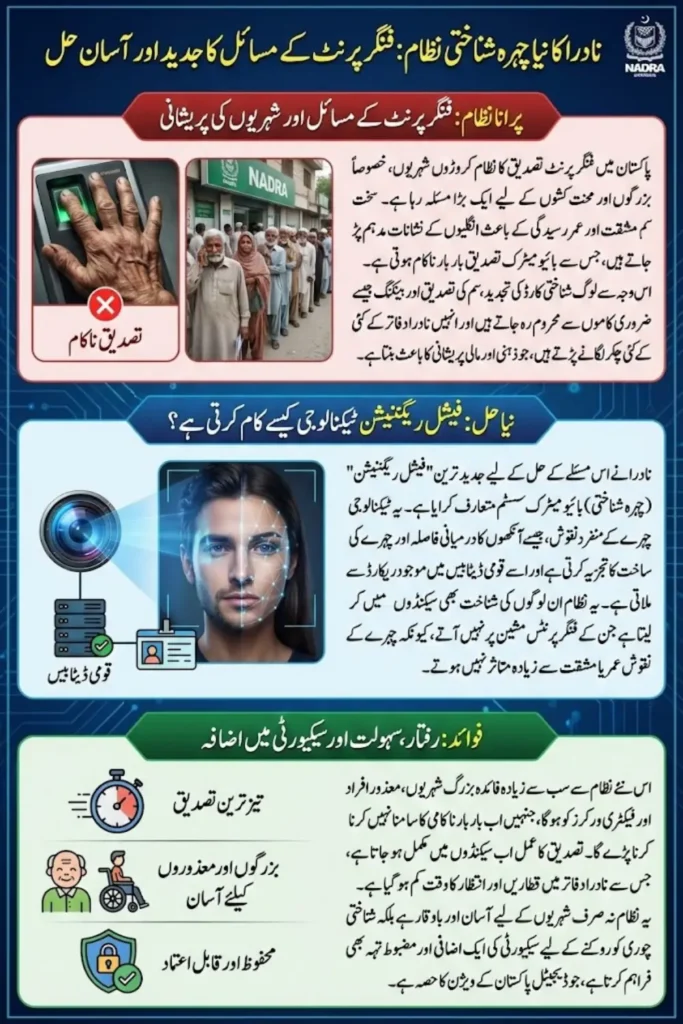
This new facility has been introduced to reduce dependency on fingerprints and to provide a smoother experience for citizens. Facial recognition uses modern technology to verify identity through facial features, which remain more consistent over time. From a public service perspective, this step reflects NADRA’s intention to modernize its systems while keeping the needs of ordinary citizens at the center.
You Can Also Read: Punjab Intermediate Annual Exams 2026
Challenges with Fingerprint-Based Biometric Verification
Fingerprint verification has always faced practical limitations in real-life conditions. In Pakistan, a large portion of the population is involved in manual labor, agriculture, or domestic work. Continuous physical work slowly erodes fingerprint clarity, making biometric verification unreliable for many people. I have personally seen citizens being rejected multiple times by machines despite having valid CNICs.
These failures create serious problems beyond inconvenience. People are unable to update records, verify SIMs, receive social welfare payments, or complete banking procedures. Repeated failures force citizens to visit NADRA offices again and again, leading to financial loss, travel fatigue, and mental stress.
Common causes behind fingerprint verification problems include:
- Aging, which naturally weakens fingerprint patterns
- Hard manual labor that damages skin texture
- Burns, cuts, or long-term skin conditions
- Poor fingerprint quality already stored in records
You Can Also Read: You Can Check EOBI Status Via SMS
Facial Recognition Technology: How the New System Works
Facial recognition technology works by analyzing unique facial characteristics such as face shape, eye distance, and overall facial structure. NADRA’s system captures these features and compares them with the data already available in its national database. This process allows identity verification even when fingerprints are unreadable.
Unlike fingerprints, facial features are less affected by daily work or minor injuries. This makes facial recognition a more stable biometric option for long-term use. NADRA officials have indicated that the system has been introduced after careful testing to ensure accuracy, security, and compatibility with existing records.
To understand the practical difference, the table below shows how facial recognition compares with traditional fingerprint verification:
| Aspect | Fingerprint Verification | Facial Recognition System |
|---|---|---|
| Effect of age and labor | High impact | Minimal impact |
| Failure rate | Relatively high | Significantly lower |
| Time per verification | Longer due to retries | Faster process |
| Citizen convenience | Limited | Improved |
You Can Also Read: Diamer BISP Beneficiaries Notice: Wallet Account
Groups Who Will Benefit the Most from This Facility
The introduction of facial recognition will be life-changing for certain segments of society. Elderly citizens often face repeated biometric failures due to age-related changes in fingerprints. I have seen many senior citizens leave NADRA offices disappointed after multiple failed attempts. Facial recognition offers them a dignified and practical solution.
Persons with disabilities will also benefit greatly, as fingerprint machines can be difficult for them to use. In addition, people whose fingerprints have been burned, erased, or weakened due to medical or occupational reasons will finally have an alternative verification method.
This facility is especially helpful for:
- Senior citizens with faded fingerprints
- Persons with physical disabilities
- Laborers and factory workers
- Citizens facing repeated biometric rejection
You Can Also Read: Schools Reopening After Winter Vacation
Improvements in Speed, Security, and Accuracy
One of the most noticeable improvements with facial recognition is speed. Verification can be completed within seconds, reducing queues and waiting time at NADRA centers. Faster verification also means that staff can serve more people efficiently, improving overall service delivery.
From a security perspective, facial recognition adds another strong layer to identity protection. Facial features are harder to misuse or replicate compared to fingerprints. NADRA has emphasized that this system is designed to maintain data protection standards while ensuring accurate identification.
Key improvements introduced by this system include:
- Faster verification without repeated attempts
- Reduced chances of false rejection
- Improved protection against identity misuse
You Can Also Read: BISP Kafalat Program Update 2026: Rs. 14,500 Quarterly
Relief from Repeated Office Visits and Biometric Failures
Repeated visits to NADRA offices have been one of the biggest complaints of citizens for years. People often travel long distances, only to be told that their biometrics have failed. Facial recognition is expected to drastically reduce such cases by offering an alternative that works for most people.
With fewer failures, citizens will be able to complete their tasks in fewer visits. This will save time, transportation costs, and emotional stress, especially for people coming from rural or remote areas. Overall, the system promises a more citizen-friendly experience.
Role of This Initiative in Digital Pakistan Vision
This initiative strongly supports the Digital Pakistan vision, which aims to improve governance through technology. A reliable and inclusive identity system is the foundation of digital services, and NADRA’s move strengthens that foundation.
By adopting facial recognition, NADRA is signaling a shift toward smarter, data-driven public services. This system can also support future digital initiatives, including e-governance platforms and secure online verification services.
You Can Also Read: NADRA Services Now Available at e-Sahulat
Public Awareness and Social Responsibility
Despite its importance, many people may not be aware of this new facility. Lack of information often creates unnecessary confusion and fear among citizens, especially the elderly. It is important that people who know about this system guide their family members and neighbors who face biometric issues.
Sharing accurate information helps ensure that deserving citizens can benefit without stress. Public awareness will play a key role in the successful adoption of this facility.
Conclusion
NADRA’s facial recognition biometric system is a timely and practical reform that directly addresses real problems faced by Pakistani citizens. From personal observation, this step has the potential to reduce frustration, improve trust, and make identity verification more humane.
By minimizing biometric failures, saving time, and improving security, this initiative moves Pakistan closer to a modern and inclusive national identification system. If implemented smoothly across the country, it can significantly improve the everyday experience of citizens dealing with NADRA services