

Zewar-e-Taleem Scheme
Zewar-e-Taleem Scheme In many areas of Pakistan, especially in low-income neighborhoods and rural communities, girls’ education is often interrupted due to financial pressure at home. I have personally seen parents who want their daughters to study but simply cannot afford daily school expenses like transport, stationery, and uniforms. When income is limited, families are forced to make difficult choices, and unfortunately, girls’ education is often affected first.
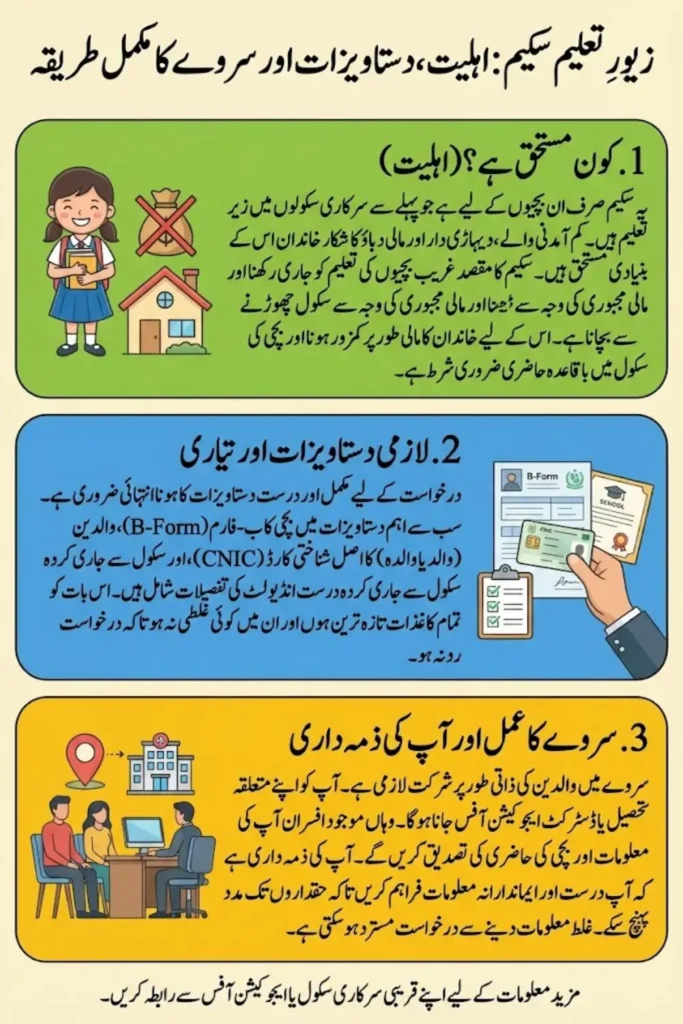
The Zewar-e-Taleem Scheme was launched to reduce this burden and support families who are genuinely struggling but committed to their daughters’ education. This initiative provides monthly financial assistance to school-going girls so that they can continue their studies without interruption. The program is not just about money; it is about keeping girls connected to schools and preventing dropouts caused by poverty.
You Can Also Read: Punjab E-Taxi Scheme Launch in Major Cities
Who Can Benefit From This Education Support Program
The Zewar-e-Taleem Scheme specifically targets girls who are already enrolled in school and belong to financially vulnerable families. This is an important point because the program is designed to support continuation, not fresh admissions. Families that are facing regular financial stress and find it difficult to manage education-related costs are the primary focus.
From what I have observed, the majority of beneficiaries come from households where parents earn daily wages or have unstable income sources. These families value education but need support to sustain it. The scheme ensures that deserving students are identified through proper verification instead of random distribution.
Girls who can benefit include:
- Students currently studying in government schools
- Girls from low-income or financially stressed households
- Families willing to cooperate with verification and survey requirements
You Can Also Read: 8171 Tracking Portal 2026 To Check BISP Payment
Monthly Stipend Details for Female Students
The monthly stipend provided under the Zewar-e-Taleem Scheme plays a crucial role in supporting everyday educational needs. While the amount may seem modest, for many households it covers essential expenses such as notebooks, pens, school bags, and local transport. This assistance often becomes the difference between regular attendance and irregular schooling.
Teachers and school administrators frequently report improved attendance and engagement once families start receiving this support. Parents also feel more confident sending their daughters to school regularly because some of the financial pressure is lifted. Over time, this small but consistent assistance helps reduce dropout rates.
The stipend helps families by:
- Covering basic education-related expenses
- Reducing financial stress on parents
- Encouraging consistent school attendance
Registration and Survey Locations Explained
Registration for the Zewar-e-Taleem Scheme is conducted through physical channels to ensure transparency and accurate verification. Parents are advised to visit their nearest government school first, where school staff guide them about the process and confirm the student’s enrollment status.
In most cases, the Tehsil Education Office and District Education Office are responsible for conducting surveys and final verification. In some districts, parents can also seek guidance from Benazir Income Support Program or Ehsaas Centers, especially if they are already part of social welfare programs. This multi-channel approach helps families access information more easily.
You Can Also Read: Khelta Punjab Players to Get Electric Bikes and Laptops
| Registration Location | Role in the Process |
|---|---|
| Government School | Initial guidance and enrollment verification |
| Tehsil Education Office | Survey and data checking |
| District Education Office | Review and approval |
| BISP / Ehsaas Centers | Guidance in selected districts |
Step-by-Step Survey Participation Process
The survey process is straightforward but requires careful preparation. Parents must personally visit the concerned office or school along with the required documents. During the survey, officials verify the child’s school attendance and family information to ensure eligibility.
Based on experience, families who provide clear and honest information usually face fewer delays. The purpose of in-person verification is to ensure that the stipend reaches deserving students and is not misused.
The survey process generally includes:
- Visiting the assigned registration or survey point
- Submitting all required documents
- Answering basic questions about household and education
You Can Also Read: Punjab Dhee Rani Program Quota Extended
Documents Needed for Successful Enrollment
Documents play a central role in the approval of applications. Many families face rejection simply because documents are missing or school information is incomplete. Parents should prepare all documents in advance to avoid repeated visits.
The required documents are simple and usually available in most households. However, accuracy and completeness are essential for smooth processing.
Required documents include:
- Girl’s B Form for student identification
- Father’s or mother’s CNIC for family verification
- Complete and correct school enrollment details
You Can Also Read: CM Punjab Parwaz Card Registration For Students
Role of Parents in the Application Process
Parents are expected to actively participate in the application and survey process. Their physical presence is mandatory because officials may need clarification regarding household income, living conditions, or the student’s education status. Applications submitted without parental involvement often remain incomplete.
I have seen that when parents cooperate fully and provide correct information, the process becomes much smoother. The scheme relies on trust, verification, and accountability, which makes parental responsibility extremely important.
Parents must:
- Appear in person during the survey
- Provide accurate and honest information
- Ensure documents are complete and valid
Common Reasons Applications Face Issues
Even eligible families sometimes face problems due to avoidable mistakes. Most issues arise because parents are unaware of requirements or fail to bring complete documentation. These mistakes can delay approval or result in rejection.
Common issues include:
- Missing or expired documents
- Incorrect or incomplete school information
- Parents not appearing personally for verification
Proper preparation can prevent most of these problems.
You Can Also Read: E-Taxi Scheme 2026: Check Eligibility
Final Guidance for Deserving Families
The Zewar-e-Taleem Scheme is a meaningful support system for families who want to educate their daughters despite financial hardship. I have seen many girls continue their education with confidence after receiving this assistance, and parents feel reassured knowing that support is available.
Families should apply as early as possible and share this information within their communities. Many deserving households miss out simply due to lack of awareness. By spreading correct information, more girls can stay in school and build a secure future through education.