
PM Laptop Scheme 2026
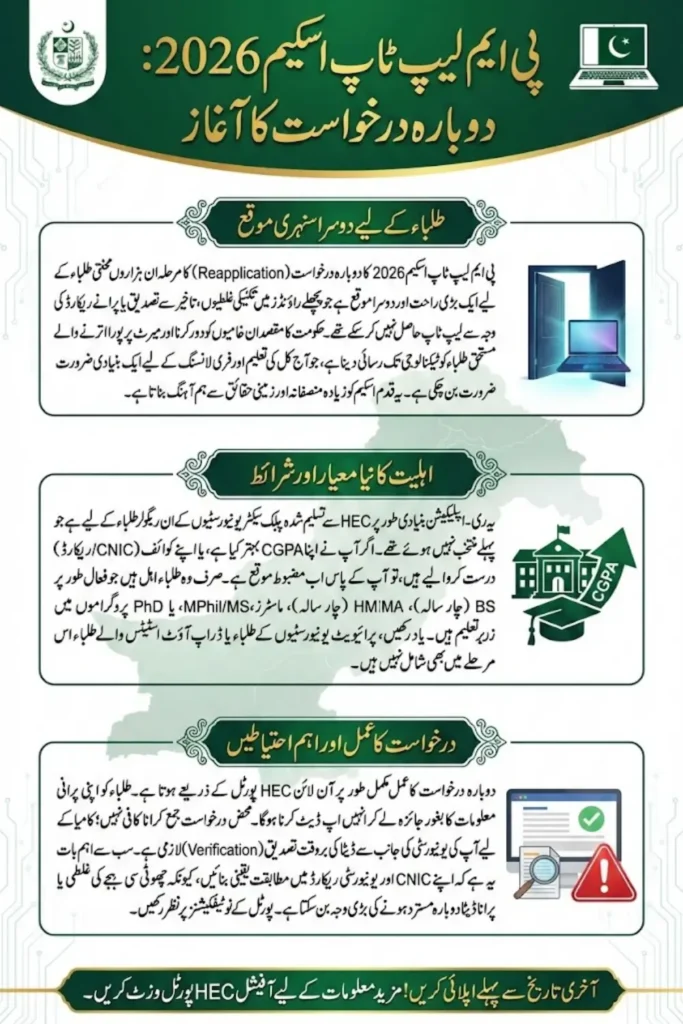
PM Laptop Scheme 2026 reapplication phase has come as a major relief for thousands of students across Pakistan who were unable to receive a laptop in earlier rounds. Over the years, while covering education-related initiatives, I have personally seen many hardworking students lose opportunities not because they lacked merit, but because of small technical mistakes, delayed verification, or incomplete records. This reapplication phase is designed exactly to fix those gaps and give deserving students another fair chance.
In today’s academic environment, a laptop is no longer a luxury item. It has become a basic requirement for online classes, research work, assignments, freelancing, and even skill learning. By reopening applications, the government is acknowledging that access to technology directly affects a student’s future. This step makes the PM Laptop Scheme 2026 more inclusive, practical, and aligned with real ground realities in Pakistan.
You Can Also Read: 8171 Payment Update: Rs. 14,500 Messages Officially
Why the Reapplication Phase Has Been Introduced
The government introduced the reapplication phase after identifying repeated issues faced by students during earlier distributions. Many applications were rejected due to outdated academic data, CNIC mismatches, or delays from universities in verification. These were administrative problems, not merit-related failures, and the reapplication phase aims to correct this injustice.
Another important reason is that students’ academic positions change with time. A student who was in an early semester or had a lower CGPA previously may now be fully eligible. Instead of permanently excluding such students, the government has allowed reassessment, which strengthens trust in the merit system.
Key reasons behind launching reapplication include:
- Incorrect or incomplete university records in previous phases
- CNIC or B-Form data mismatch with academic documents
- Students who improved their CGPA after earlier merit lists
- Delayed or missing university verification
You Can Also Read: BISP Payment Update: CNIC Renewal Rules
Who Should Apply Again in 2026
The PM Laptop Scheme 2026 reapplication is mainly for students who applied earlier but were not selected. If your name did not appear in the final merit list, this does not automatically mean you were ineligible. In many cases, applications were rejected due to missing data or verification delays.
From my observation, students who remained consistent in their studies and improved their academic performance now have a strong chance. The reapplication phase ensures that students are judged on their current academic standing rather than old records.
Students encouraged to reapply include:
- Previously rejected applicants from public sector universities
- Students whose CGPA or semester status has improved
- Students who corrected CNIC or registration details
- Regular students currently enrolled and verified
You Can Also Read: 8171 Payment SIM Verification Through Tehsil
Updated Academic and Institutional Requirements
For reapplication under the PM Laptop Scheme 2026, the basic academic structure remains clear and strict. Only students from HEC-recognized public sector universities and degree-awarding institutions are considered. Private university students are still not included, regardless of their academic performance.
Active enrollment is another critical condition. Students on leave, dropout status, or with incomplete semester records often face rejection. Universities play a key role here, as all data must be officially verified before final approval.
Academic requirements at a glance:
- Enrollment in a public sector, HEC-recognized institution
- Active and regular student status
- Enrollment in BS (4-year), Master’s, MS/MPhil, or PhD programs
You Can Also Read: Hunarmand Nawaz Program Brings Paid Digital Skills
Merit Evaluation Method Used in Reapplication
Merit evaluation during reapplication is done using updated and verified academic data. The Higher Education Commission relies heavily on universities to confirm CGPA, semester completion, and program status. This makes coordination with your university administration extremely important.
Merit is calculated comparatively, meaning students are ranked against others in the same discipline and institution. Even a small improvement in CGPA can significantly improve ranking, which is why many students benefit during reapplication.
Merit assessment is based on:
- Latest CGPA and completed semesters
- Discipline and program competitiveness
- Verified records submitted by universities
Step-by-Step Reapplication Procedure Explained
The reapplication process for PM Laptop Scheme 2026 is completely online and requires careful attention from students. Simply registering is not enough; data accuracy and follow-up are equally important. Students must review their previous information and update it where necessary.
After submission, universities verify applications before forwarding them for merit evaluation. This two-step check helps eliminate fake or incomplete entries and ensures transparency.
You Can Also Read: BISP Payment Update January 2026: Q2 Installment
General reapplication process includes:
- Logging into the official HEC portal
- Updating academic and personal information
- Submitting reapplication request
- University verification of records
- Merit list publication and final approval
Common Mistakes That Lead to Rejection
Despite clear instructions, many students still face rejection due to avoidable mistakes. One of the most common issues is data mismatch between CNIC and university records. Even a minor spelling error can delay or cancel an application.
Another frequent mistake is ignoring verification status. Students often assume their application is complete after submission, while in reality, it remains pending until the university confirms it.
Mistakes students should avoid:
- Uploading outdated transcripts or CGPA records
- CNIC or B-Form details not matching university data
- Missing university verification deadlines
- Ignoring portal notifications
You Can Also Read: Rs 750 Prize Bond Draw Results for January 2026
Laptop Allocation and Distribution Mechanism
Once merit lists are finalized, laptops are allocated to universities based on approved quotas. Distribution is usually carried out through official campus ceremonies to maintain transparency and accountability. Students are informed through their institutions regarding dates and requirements.
During distribution, students must present original identification documents. This ensures that laptops reach the rightful beneficiaries and prevents misuse.
Expected Reapplication Timeline for 2026
Although official dates are announced separately, the reapplication process generally follows a fixed pattern. Understanding this timeline helps students prepare documents in advance and avoid last-minute issues.
| Phase | Activity |
|---|---|
| Reapplication Opening | Online data update and submission |
| Verification Period | University confirmation |
| Merit List Announcement | Final shortlisted candidates |
| Laptop Distribution | Campus-based handover |
Benefits of Reapplying Under PM Laptop Scheme 2026
Reapplying under this scheme can change a student’s academic and professional journey. A laptop provides direct access to online learning platforms, digital libraries, research tools, and freelancing opportunities. In Pakistan’s current economic environment, digital skills often lead to independent income sources.
I have personally seen students from small towns start online work and skill-based careers after receiving laptops through earlier schemes. This initiative reduces the digital divide and creates equal opportunities.
Special Focus on Underdeveloped Regions
The PM Laptop Scheme 2026 gives special attention to students from underdeveloped and remote regions. Provinces like KP, Balochistan, interior Sindh, and Gilgit-Baltistan are being prioritized to ensure balanced national development.
This approach recognizes that talent exists everywhere, but resources do not. Providing laptops to students in these areas helps unlock potential that would otherwise remain hidden.
Government Message for Students
The government’s message to students is clear: remain honest, keep your records updated, and trust the merit system. Students are advised to follow official instructions carefully and avoid misinformation spread on social media.
The PM Laptop Scheme 2026 is an investment in Pakistan’s youth. Responsible use of this opportunity is expected to contribute to national progress.
Final Thoughts
The PM Laptop Scheme 2026 reapplication phase is a valuable opportunity for students who missed out earlier. With accurate data, timely submission, and proper university coordination, many deserving students can finally benefit.
This scheme is not just about distributing laptops. It is about empowering Pakistani youth with tools to learn, earn, and compete globally. For many students, this second chance could be the beginning of a brighter and more independent future.