

Phase 2 Eligibility Is Based On Poverty Means Test Verification
Phase 2 Eligibility Is Based On Poverty Means Test Verification Government of Pakistan has announced a structured system for releasing the next BISP installment under Phase 2, designed to ensure that financial assistance reaches only the households that meet the official poverty criteria. The upcoming payment of Rs. 13,500 will be provided exclusively to beneficiaries who have been successfully verified through the Poverty Means Test (PMT). As inflation rises and daily living costs increase, this installment plays a central role in helping families maintain essential food, household, health, and educational needs. Understanding how PMT works, how district-wise phases are organized, and how beneficiaries can confirm their eligibility is essential for ensuring smooth and timely payments.
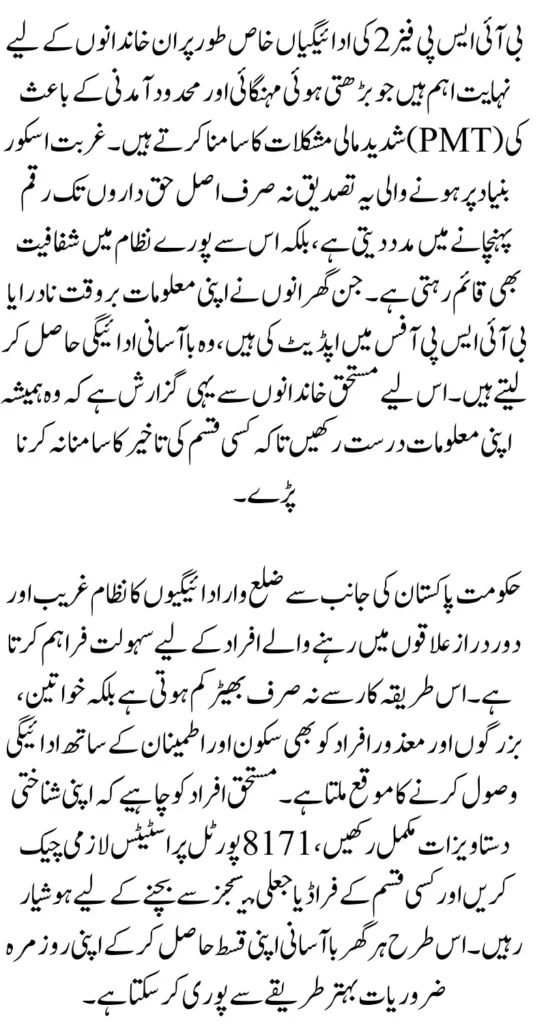
The Poverty Means Test has become a mandatory step for determining eligibility because it uses digital data to assess a household’s financial condition, income stability, assets, family size, and social indicators. This automated verification helps the government identify genuine beneficiaries, reduce fraud, and maintain transparency. Families who have recently cleared or updated their PMT information are automatically included in Phase 2, ensuring that support is directed to those experiencing real financial hardship. This guide explains every part of the process in a simple, human-friendly way so beneficiaries can complete verification and receive their installment without confusion.
To help people prepare properly, BISP avoids nationwide bulk releases and instead activates payments district by district. This prevents overcrowding at partner banks, retail outlets, and BISP payment centers. It also improves security, reduces mismanagement, and ensures better service for women, elderly citizens, and disabled beneficiaries. For families living in remote areas where transportation is limited, phased payments provide enough time to prepare documents, confirm CNIC details, and attend the center when their district’s date becomes active.
You Can Also Read: BISP Missed Payment Reasons And Complete Solution
How PMT Verification Determines Eligibility for BISP Phase 2
The Poverty Means Test is the foundation of Phase 2 eligibility. It is a digital scoring system that analyzes household poverty status using verified records from NADRA and BISP databases. Families who score within the eligible poverty range are marked as cleared for the next payment. Those who fail or require corrections are asked to update their records before installments can be released. This ensures that the support reaches families who need it most and prevents inclusion of ineligible households.
PMT verification is performed automatically, but beneficiaries should still ensure that their personal and family information is correct at NADRA. Wrong addresses, mismatched family data, or outdated marital records can cause delays. Beneficiaries who recently completed a survey or update process usually see their payment status appear sooner because their data is fresh and verified in the BISP system. Understanding your PMT status is therefore the most important step before visiting a payment center.
You Can Also Read: 8171 BISP Payment Schedule December 2025
PMT results fall under three categories:
- PMT cleared, meaning your installment will be released in Phase 2
- PMT update required, meaning your data needs correction at NADRA or BISP office
- PMT unverified, meaning you must complete verification before the next payment
Why BISP Uses District-Wise Phases for Payments
BISP divides the installment release into phases to avoid long queues, mismanagement, and overcrowding. Each district in Pakistan receives its activation date separately, giving beneficiaries enough time to reach their payment center and complete biometric verification with ease. This phased model is especially helpful for women, elderly individuals, and disabled persons who cannot stand for long hours or travel in heavy crowds.
District-wise phasing also helps BISP manage technical operations more efficiently. Banks and partner outlets often face high network loads when payments are released all at once. By splitting the process into phases, the system remains stable and error-free, allowing staff to verify identity and release payments without interruption. This improves security and reduces cases of fraud or illegal deductions because staff can focus on smaller crowds and resolve issues immediately.
To prepare for your district’s activation date, beneficiaries should:
- Confirm PMT status before visiting the payment center
- Keep their original CNIC with them
- Visit only on the date assigned for their district
- Avoid middlemen or agents who offer to “speed up” the process
You Can Also Read: Cm Punjab Interest-free Student Bike Scheme 2026
How to Check Your Phase 2 Payment Status
BISP has made it simple for beneficiaries to confirm whether their Rs. 13,500 installment is active. You can check your payment using online and offline methods so that even people in remote areas can confirm their status before traveling. The most commonly used method is the 8171 web portal, where you can enter your CNIC to view eligibility, PMT clearance, and payment release dates. The SMS method is ideal for those without internet access, while the helpline is helpful for individuals facing problems such as biometric failures or mismatched records.
Visiting a BISP tehsil office is only necessary if your record needs correction or verification. Otherwise, most beneficiaries can rely on the portal for updates. Keeping your SIM card registered under your own CNIC is also necessary because payment alerts and verification messages are sent only to the registered number.
Methods to Check BISP Phase 2 Eligibility and Payment Activation
| Method | How It Works | Requirements |
|---|---|---|
| 8171 Web Portal | Enter CNIC and captcha to view status | Valid CNIC |
| SMS to 8171 | Send CNIC to receive instant reply | Registered SIM |
| BISP Helpline | Call 0800-26477 for assistance | CNIC + phone number |
| Tehsil Office | Visit for record corrections | CNIC + NADRA documents |
Biometric Verification and What to Expect on Payment Day
Biometric verification is mandatory for all beneficiaries receiving the payment. The method ensures that the installment reaches the rightful person and reduces the chances of fraud. When you arrive at the payment center, staff will scan your CNIC and verify your fingerprints using the NADRA database. If the fingerprints match, the payment is released immediately. If they do not match, the system allows multiple retry attempts before sending the beneficiary to the BISP desk for alternative verification.
Payments are issued only through authorized partner banks and BISP camps, ensuring that no unauthorized individuals handle sensitive data. Every beneficiary must collect a printed receipt showing the full amount of Rs. 13,500. If any staff member attempts to deduct money or asks for a fee, you should report it instantly to the BISP helpline. Staying alert and informed helps prevent exploitation and ensures you receive your full entitlement without trouble.
You Can Also Read: Benazir Kafalat Program Check Cnic Online Registration
Follow these rules at payment centers:
- Carry only your own original CNIC
- Do not share personal codes, fingerprints, or receipts with others
- Always take an official printed payment slip
- Report any suspicious behavior to BISP officers immediately
Common Reasons for Payment Delays and How to Fix Them
Many beneficiaries face delays due to small issues that can be resolved quickly. The most common cause is that the SIM card used for verification is not registered to the beneficiary’s CNIC. In such cases, the system cannot deliver alerts or confirm the payment. Another frequent issue is outdated NADRA information, especially for households that recently experienced marriage, relocation, or changes in family structure.
Biometric mismatches, technical errors, or incomplete survey results also lead to delays. However, these issues can be easily resolved by visiting the nearest tehsil office and providing the correct documents. Once the verification is completed and updated in the system, payment status becomes active automatically without needing to restart the process.
Common reasons for delays:
- Inactive SIM registered to another person
- PMT verification not completed
- Biometric mismatch at the center
- Incorrect or outdated NADRA data
- Duplicate registration detected
- Tehsil office verification pending
You Can Also Read: Meezan Bank Easy Home 2026 Details
How to Stay Safe from Scams During BISP Payments
Whenever BISP payments are released, scammers attempt to trick beneficiaries through fake SMS links, phone calls, and fraudulent websites. Beneficiaries should only trust messages from 8171 and ignore any other numbers claiming to release or activate payments. No representative is allowed to ask for PIN codes, fingerprints, or bank account details.
Avoiding fraud is simple if beneficiaries stay aware. The government never asks for advance payments, service charges, or registration fees. All BISP installments are released free of cost, and any person trying to charge fees is committing a punishable offense.
Real Impact of BISP Phase 2 Payments on Families
The Phase 2 installment has had a strong and positive impact on low-income households across Pakistan. For families living in rural areas with unstable monthly income, the installment provides essential stability by supporting food, utility bills, and education costs. Women beneficiaries, especially widows, single mothers, and disabled individuals, rely on these payments for medication, school-related needs, and household management.
Across coastal and mountainous districts, families with seasonal incomes benefit greatly because their monthly earnings fluctuate. BISP payments reduce their dependence on borrowing and help them maintain dignity and financial independence. In major cities and urban areas, the installment helps families manage rent, electricity bills, and rising food prices without falling deeper into debt.
You Can Also Read: Benazir Hunarmand Program Via Online Portal 2026
Checklist Before Visiting Payment Centers
To ensure a smooth experience at the payment center, always follow this checklist:
- Confirm payment status before leaving home
- Carry your original CNIC only
- Ensure your SIM is registered in your own name
- Visit only on the scheduled date for your district
- Avoid relying on middlemen or agents
- Keep all documents needed for verification
- Always take your printed payment receipt
Conclusion
The BISP Phase 2 installment, based on Poverty Means Test verification, ensures that financial support reaches families who genuinely need it. By following the verification steps, keeping your CNIC and SIM updated, and visiting centers only on your district’s date, you can ensure that your Rs. 13,500 installment is received without difficulty. Staying aware of verification requirements and preventing fraud helps you protect your entitlement and benefit fully from the government’s support program