
New Federal Rules Reshape Student Loan Repayments
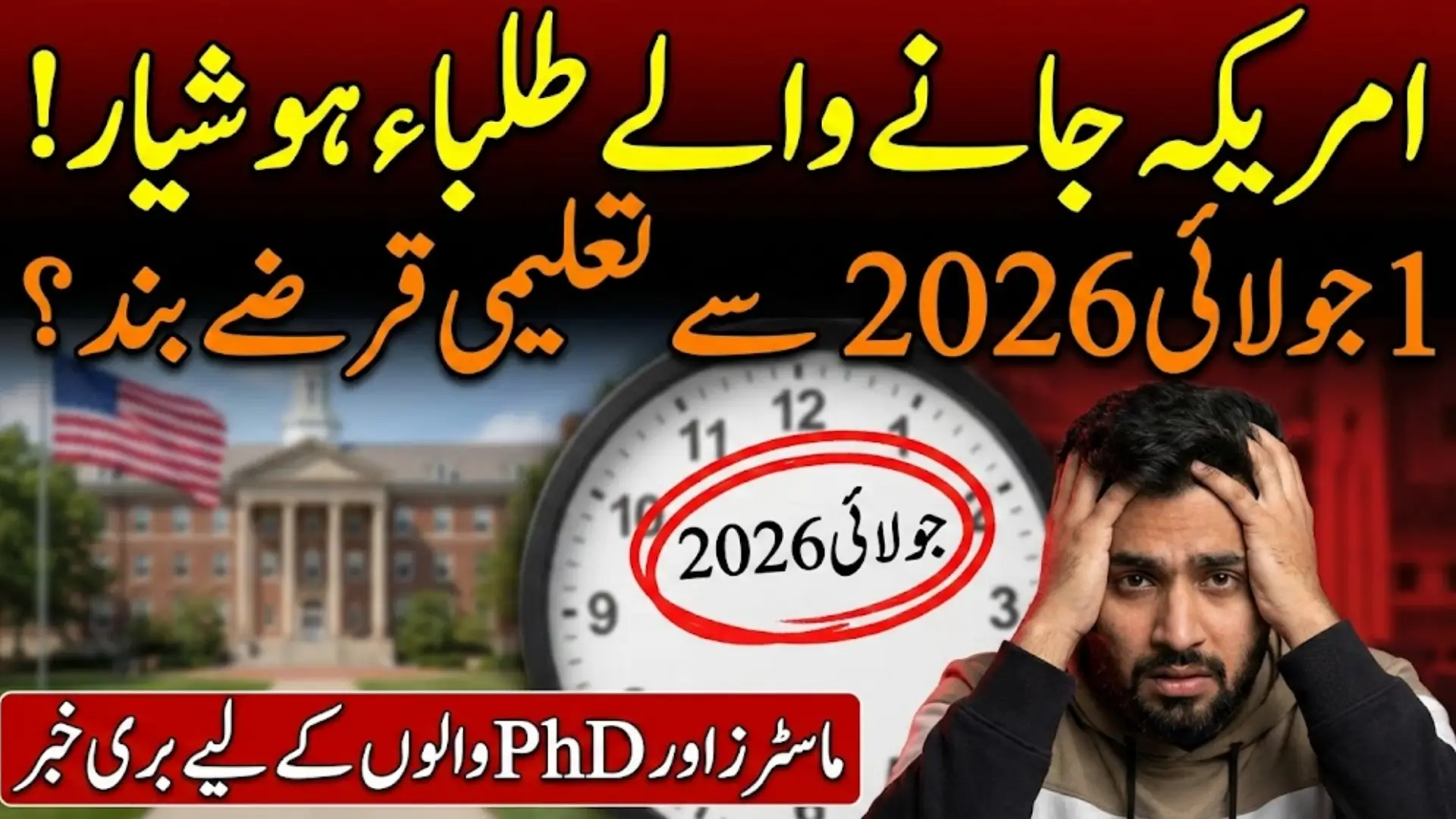
New Federal Rules Reshape Student Loan Repayments From July 1, 2026, the United States is set to introduce major changes to its federal student loan repayment system. These changes will affect millions of borrowers, including international students and Pakistani families who send their children abroad for higher education. Over the years, student loans have become a heavy burden, especially for graduate and doctoral students who spend many years studying before earning a stable income. The new rules aim to simplify repayment, reduce confusion, and prevent borrowers from falling into long-term financial stress.
As someone who regularly follows education and finance-related developments, it is clear that many students only focus on getting admission and visas, while loan rules are often ignored. Unfortunately, repayment issues usually start after graduation, when reality hits. This article explains the upcoming changes in simple, human language so that even an ordinary reader can understand what is changing and why it matters.
You Can Also Read: Free Driving Classes in Major City Launched
Why the U.S. Government Is Changing Student Loan Rules
The main reason behind these reforms is the rapidly increasing student debt across the United States. Millions of borrowers are struggling to make monthly payments, and many fall behind due to low starting salaries or unstable employment. Existing repayment plans are often complex, with different conditions that confuse borrowers instead of helping them.
The government believes that a simpler, income-based system can reduce defaults and make repayment fairer. Instead of having multiple repayment options, the new system focuses on one main structure that adjusts payments according to earnings. For Pakistani students studying in the U.S., this is a reminder that education financing rules can change during long study periods, and planning should always consider future policies, not just current ones.
You Can Also Read: Punjab Extends Winter Vacations for Public and Private
How Student Debt Affects Graduate and PhD Students
Graduate and PhD students are usually the most affected by student loans. These programs take longer to complete and often cost much more than undergraduate degrees. Many students borrow heavily with the hope that higher education will lead to better-paying jobs, but the early years after graduation can be financially difficult.
In many cases, students graduate with debts ranging from $70,000 to $100,000 or even more. For Pakistani students, this pressure becomes double because earnings may later be in Pakistani rupees while loans are in dollars. This gap can make repayment extremely challenging.
Common issues faced by graduate borrowers include:
- Long study duration with limited income
- High tuition fees for advanced degrees
- Fewer scholarships compared to undergraduate programs
Repayment Assistance Program (RAP): A New System for Future Loans
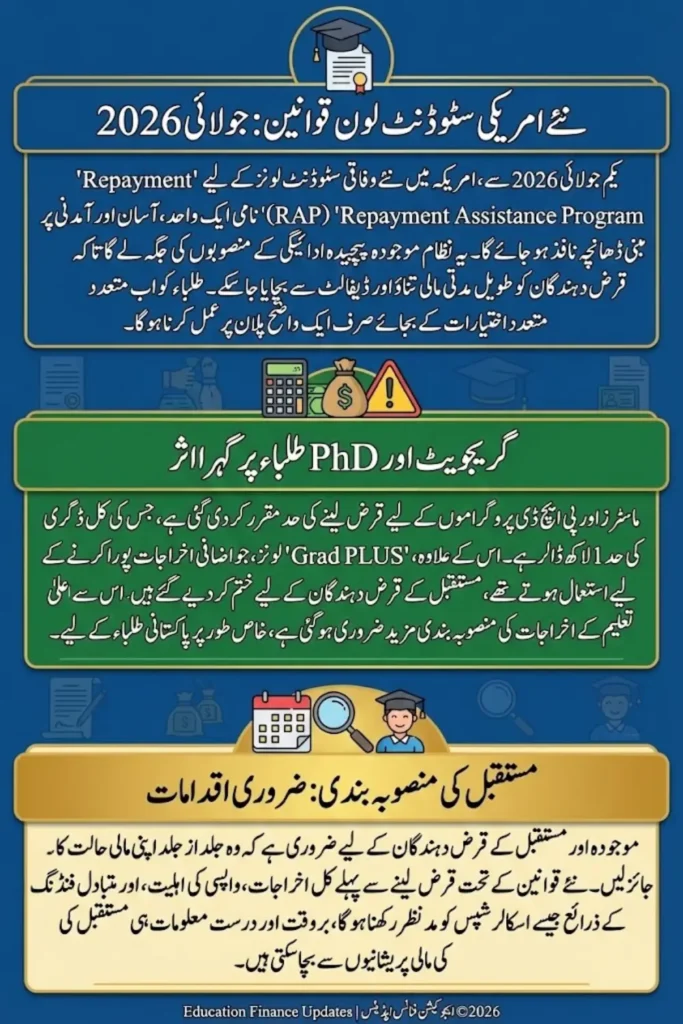
Starting in 2026, all new federal student loans in the U.S. will fall under a new structure called the Repayment Assistance Program, commonly known as RAP. This program is income-driven, meaning monthly payments will depend on how much a borrower earns, not just how much they owe.
The idea behind RAP is to remove complexity and reduce financial anxiety. Borrowers will no longer have to choose between multiple repayment plans. Instead, one clear system will guide repayments, making it easier to understand and manage.
Key points of the Repayment Assistance Program include:
- Monthly payments linked to income level
- Fewer rules and less paperwork
- Lower risk of default for low-income earners
You Can Also Read: BISP Second Installment Released for Women
Phase-Out of Existing Repayment Plans After 2026
Under the new law, many existing federal repayment plans will no longer be available for new loans issued after mid-2026. These plans currently offer flexibility, but they also create confusion because borrowers often struggle to choose the right option.
It is important to note that borrowers who took loans before 2026 will not be forced to switch immediately. They will have time to continue under their current plans or move to new ones if needed. Undergraduate borrowers will also have some protections under the revised system.
Important points to remember:
- New loans after 2026 will follow RAP
- Old loans may stay under current plans
- Early planning can prevent future problems
New Borrowing Limits for Graduate Students
One of the most serious changes is the introduction of borrowing limits for graduate students. In the past, students could borrow large amounts, especially through Grad PLUS loans. The new rules aim to stop excessive borrowing that leads to unmanageable debt later.
Under the proposed limits, graduate students will face strict caps on how much they can borrow each year and throughout their degree. This change will force students and families to calculate costs more carefully before enrolling in expensive programs.
Graduate Student Borrowing Limits After 2026
| Loan Category | Borrowing Limit |
|---|---|
| Annual Limit | $20,500 |
| Total Degree Limit | $100,000 |
Elimination of Grad PLUS Loans for Future Borrowers
Grad PLUS loans have been a major source of funding for students pursuing master’s and PhD programs. These loans allowed borrowing beyond standard limits to cover tuition, housing, and living expenses. Under the new rules, Grad PLUS loans will no longer be available for future borrowers.
This change will significantly affect students who depend on these loans to complete their education. Pakistani students, in particular, will need to explore alternative funding options well in advance.
Possible alternatives include:
- University scholarships and assistantships
- Family financial support
- Carefully selected private education loans
You Can Also Read: Rawalpindi Traffic Police Issues Record Number
What Current Borrowers Should Do Before 2026
If you already have federal student loans taken before 2026, this is the best time to review your situation. Financial experts strongly recommend checking repayment plans, understanding loan terms, and staying updated with policy changes.
From what I have observed, borrowers who ignore such updates often face unexpected increases in payments or missed deadlines. Preparation today can save years of stress later.
Recommended steps for current borrowers:
- Review all active student loans
- Compare repayment options carefully
- Follow official announcements and deadlines
You Can Also Read: Green Tractor Scheme Phase 3 Registration Open
Expert Warnings About Rising Loan Delinquencies
Experts expect an increase in serious student loan delinquencies as repayments restart and rules change. Many borrowers are already financially stretched due to inflation and job market uncertainty. This is one of the main reasons the government is pushing for a simpler repayment structure.
Delinquency damages credit history and creates long-term financial problems. The new system aims to reduce these risks, but borrowers must also take responsibility by understanding their obligations clearly.
Staying Focused on Education Despite Financial Pressure
Despite financial uncertainty, many students remain determined to complete their education. I have personally seen students actively consult professors, financial aid offices, and education advisors to find ways to manage costs.
For Pakistani students, asking questions early and understanding loan terms before signing any agreement is essential. Education is an investment, but only when financial decisions are made wisely and with full awareness.
What Future Borrowers Need to Understand
Students planning to borrow after July 1, 2026, must be extra careful. Borrowing options will be more limited, and repayment rules will be stricter. This makes early financial planning more important than ever.
Future borrowers should focus on:
- Total cost of education, not just tuition
- Long-term repayment ability
- Alternative funding sources
Final Thoughts for Students and Families
The new federal student loan repayment rules starting July 1, 2026, mark a major shift in how education is financed in the United States. While the goal is to protect borrowers from overwhelming debt, the responsibility to plan wisely remains with students and families.
Whether you are already repaying loans or planning to study abroad, the key lesson is simple: understand your loans early, stay informed about policy changes, and never borrow more than you can realistically repay. From experience, those who plan ahead always face fewer financial problems in the future.