

BISP Payment Update
BISP Payment Update has shared an important payment-related update that directly affects thousands of beneficiaries across Pakistan. During recent payment cycles, many deserving families faced delays or complete stoppage of their installments. After closely observing the situation at payment centers and speaking with beneficiaries, one issue clearly stands out: problems related to expired or incorrectly renewed CNICs.
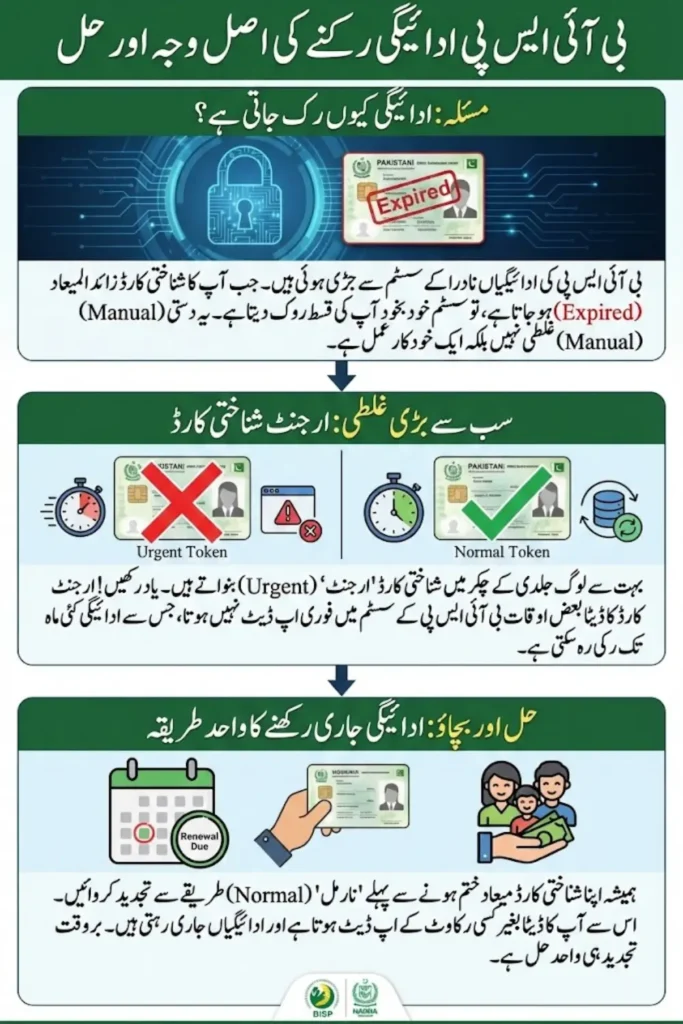
This is not a minor technical issue. BISP payments are fully dependent on CNIC verification through NADRA. Even a small mistake, such as choosing the wrong CNIC renewal type, can result in blocked payments. This article explains the complete situation in simple, easy-to-understand language so that every beneficiary can protect their financial support.
You Can Also Read: 8171 Payment SIM Verification
Why This BISP Payment Update Is So Important
BISP assistance is a major source of support for low-income families. Many households rely on this money for food, school expenses, and medical needs. When payments stop suddenly, families are left confused and helpless, often without knowing the real reason.
What has been seen on the ground is that most payment issues are not due to ineligibility. Instead, they are caused by expired CNICs or incorrect renewal choices. The BISP system works automatically, and once a CNIC becomes invalid, the payment process stops without warning.
Key reasons this update matters include:
- Payments are automatically blocked when CNIC expires
- BISP does not manually override system errors
- Many beneficiaries realize the issue too late
You Can Also Read: Hunarmand Nawaz Program Brings Paid Digital
How CNIC Verification Controls BISP Payments
BISP payments are directly linked to NADRA’s database. Every beneficiary’s CNIC is checked digitally before releasing any installment. If the system detects an expired CNIC, it immediately pauses the payment, even if the person is fully eligible.
This verification process is automatic and constant. It does not wait for complaints or visits to BISP offices. That is why keeping CNIC information valid is just as important as staying eligible for the program.
Important facts beneficiaries should understand:
- CNIC verification is system-based, not manual
- Expired CNICs are marked inactive automatically
- Payments resume only after correct data syncing
You Can Also Read: BISP Payment Update January 2026: Q2 Installment
What to Do If Your CNIC Has Expired
If a beneficiary’s CNIC has expired, the solution is simple but must be handled carefully. The CNIC must be renewed through NADRA as soon as possible. Delays in renewal often lead to long payment gaps.
Many people believe that once the CNIC is renewed, payments will restart instantly. In reality, payments resume only after NADRA updates are properly reflected in the BISP system, which takes some time.
Steps to follow immediately:
- Check the CNIC expiry date today
- Visit NADRA before the next payment cycle
- Keep the receipt until the new CNIC is issued
You Can Also Read: Rs 750 Prize Bond Draw Results for January 2026
Why Only a Normal CNIC Is Acceptable for BISP
BISP has clearly advised beneficiaries to renew their CNIC using the normal processing option only. A normal CNIC follows standard verification timelines, which allows government databases to update records smoothly.
Normal CNICs are fully compatible with BISP’s payment and verification systems. This reduces the risk of data mismatch and ensures that payments continue without interruption.
Things to remember about normal CNICs:
- They update smoothly in BISP records
- Verification is stable and reliable
- Payments remain protected
You Can Also Read: Imam Masjid Wazifa Results Announced
How Urgent CNIC Renewal Can Stop Your Payment
Many beneficiaries choose urgent CNIC renewal thinking it is faster and safer. However, field experience shows that urgent CNICs often cause serious payment issues. Because urgent CNICs are processed quickly, system synchronization between NADRA and BISP may not complete properly.
As a result, the CNIC appears valid in hand but invalid in the payment system. This mismatch leads to blocked installments, sometimes for several months.
Common risks of urgent CNIC:
- Delayed system synchronization
- CNIC not updated in payment records
- Increased chances of payment suspension
You Can Also Read: BISP SIM Usage Guidelines: How to Keep Your Payment
How Beneficiaries Can Avoid Future Payment Problems
Avoiding payment issues is much easier than resolving them later. Beneficiaries who stay aware of their CNIC status rarely face serious problems. A little attention can prevent repeated visits to payment centers.
Keeping records updated is especially important for families that depend entirely on BISP assistance for survival.
Simple precautions to follow:
- Renew CNIC before expiry
- Always choose normal CNIC processing
- Ensure personal data remains consistent
Common Mistakes Observed Among BISP Beneficiaries
During interactions at payment centers, several misunderstandings were commonly observed. Many people assume that once they are registered, payments cannot stop. Others believe urgent CNIC is a better option.
These assumptions often lead to frustration and financial stress. Understanding the system helps beneficiaries make better decisions.
Mistakes to avoid:
- Ignoring CNIC expiry dates
- Choosing urgent CNIC for faster delivery
- Expecting automatic payment restoration
CNIC Renewal Choices and Their Impact on BISP Payments
| CNIC Type | Effect on BISP Payment |
|---|---|
| Normal CNIC | Smooth verification and uninterrupted payments |
| Urgent CNIC | High risk of data mismatch and payment blockage |
Final Advice for BISP Beneficiaries
BISP support is a vital lifeline for millions of Pakistanis. Protecting this support requires timely action and correct decisions. CNIC validity is not just a formality; it is the foundation of the entire payment system.
Beneficiaries who renew their CNIC correctly and on time can avoid most payment issues. Acting early is always better than waiting for payments to stop and then searching for solutions.