

BISP 933 District Problem Removed
BISP 933 District Problem Removed 933 district problem has troubled thousands of BISP beneficiaries across Pakistan, especially women who rely on quarterly support to manage their household expenses. In most cases, the error appears when the district recorded in the BISP or HBL system does not match the district printed on the CNIC. This mismatch stops the system from verifying the identity of the beneficiary and causes the payment to remain stuck for weeks or even months. The positive news is that this issue can now be solved without visiting any office, without standing in long queues, and without repeated biometric attempts. Beneficiaries can now send their CNIC front, CNIC back, and a by-hand picture directly through a secure channel and get their payment unlocked from home.
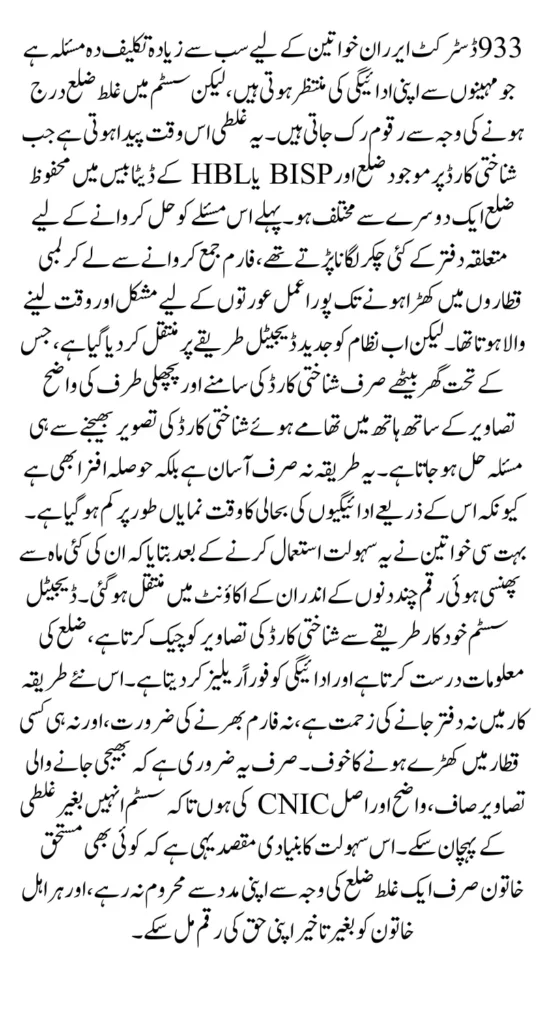
This new remote process is especially beneficial for elderly women, sick beneficiaries, and those living in remote villages where visiting BISP or HBL centers is difficult. The procedure works through digital verification, which updates the district information in the system and removes the technical blockage. Once the update is completed, the payment is instantly released to the beneficiary’s HBL account. This simple method is saving time, reducing stress, and ensuring that no one is deprived of their rightful financial assistance simply because of a minor database mismatch.
You Can Also Read: BISP Payment Phase 2 Has Begun Check The December
Who Can Use This Home-Based District Unlock Service?
The 933 district error mostly affects two types of beneficiaries: those whose district has been updated recently on their CNIC and those who have been shifted from HBL Microfinance to HBL main branch (macrofinance). In both cases, the system fails to automatically update district information, which causes the 933 error to appear. This is why the service is open to anyone whose payment status shows “pending,” “device error,” “district mismatch,” or the number “933” in the HBL system. These beneficiaries can now use the digital unlock method without any office visit.
This service helps people who have faced challenges traveling long distances, paying extra charges to agents, or repeatedly failing biometric verification. By relying on digital documents instead of physical visits, the unlock process becomes convenient, fast, and accessible for everyone. Beneficiaries simply need to prepare their documents clearly and ensure that the CNIC details match the records on file.
You Can Also Read: 8171 Payment SIM Verification Step-by-Step
You can use this service if:
- Your HBL payment shows “933” or “district mismatch”
- Your CNIC district has recently changed or updated
- Your HBL account shifted from microfinance to macrofinance
- Your payment remains pending despite eligibility
- You cannot visit the office due to health or distance concerns
Required Documents for Unlocking 933 District Error
To complete the district unlock, the beneficiary must submit a few documents that confirm their identity. The documents are used to verify the CNIC information, update the district record, and match the face with the ID card. It is essential to send clear, high-quality photos so the verification team does not reject or delay the process. Many cases take longer simply because the CNIC images are blurry or the text is unreadable.
A by-hand picture is extremely important because it proves that the person requesting the unlock is the same individual registered under the CNIC. This prevents fraud, protects beneficiaries from identity misuse, and ensures transparency. Once the documents are verified successfully, the system updates the district, removes the error, and releases the stuck amount.
You Can Also Read: Maryam Nawaz Rashan Card Initiative For PSER Registered
Required documents include:
- CNIC front side in clear HD
- CNIC back side in clear HD
- Beneficiary photo holding CNIC in hand
- Optional screenshot of HBL showing “933” or “pending” status
Step-by-Step Method to Remove the 933 Error from Home
The district unlock process has been designed to be easy, straightforward, and accessible for beneficiaries who cannot afford to visit offices repeatedly. Once the required documents are submitted, the verification team begins reviewing the CNIC details, the beneficiary image, and the recorded district information. If everything matches, the system is updated and the 933 error is removed permanently. This prevents future payment blocks and allows smooth monthly withdrawals.
The procedure works digitally, and beneficiaries do not need to be physically present at the service desk. The corrections are applied through the backend system, which automatically updates the district linkage with the associated HBL account. This ensures that payments no longer remain stuck, and the beneficiary receives the due amount without further delay.
Step-by-step process:
- Take clear HD pictures of your CNIC front and back.
- Capture a by-hand image holding your CNIC so the face is visible.
- Submit documents to the verified district unlock service.
- Pay the reasonable service fee to start the verification process.
- Wait for district update and identity confirmation.
- Receive your stuck BISP payment directly into your HBL account.
You Can Also Read: PM Laptop Scheme 2026 Who Can Apply
Time Required & Expected Fee for 933 District Unlock
The processing time and fee depend on how clear the documents are and how quickly the verification team can match the details. Beneficiaries with updated CNIC details or migration issues may take slightly longer, but most cases complete within a short period. The following table gives a natural estimate of the process from start to finish.
Approximate Time & Fee Structure for 933 District Unlock
| Step | Expected Time | Estimated Fee (PKR) |
|---|---|---|
| Document Submission | Same Day | 0 |
| Initial Check & Verification | 12–24 Hours | 300–600 |
| District Unlock Processing | 1–3 Days | 500–1000 |
| Payment Release Into HBL | 24–48 Hours | — |
Safety Measures & Red Flags Beneficiaries Must Avoid
While the district unlock process is simple, beneficiaries must protect their personal information and share documents only with verified service providers. Fraudulent agents often misuse CNIC information or demand unnecessary details such as ATM PINs, which should never be shared under any circumstances. A genuine unlock service will only ask for CNIC images and a by-hand photo, nothing more.
Beneficiaries should also ensure that the payment method used for the service fee provides a digital transaction receipt. This ensures accountability and prevents misunderstandings. Keeping a record of submitted images, transaction proofs, and messages also helps the beneficiary track progress smoothly.
You Can Also Read: Apni Zameen Apna Ghar Program Offline
Avoid these red flags:
- Requests for ATM PIN, debit card, or passwords
- Unverified pages charging extra hidden fees
- Blurry or unclear CNIC photos leading to repeated delays
- Agents claiming instant unlock without verification
Tips to Speed Up the Approval and Unlocking Process
Beneficiaries who prepare their documents correctly usually get their payments unlocked much faster than those who submit unclear images. Following a few simple steps can dramatically reduce verification time and prevent unnecessary rejections. The goal is to send accurate, clear, and readable information that matches the beneficiary’s CNIC and BISP record.
These small steps ensure transparency and protect the beneficiary from identity mismatches. Good lighting, proper framing, and correct spelling of names can make the entire process smoother. Beneficiaries should also ensure that all four corners of the CNIC are visible in photos.
Helpful tips for faster processing:
- Take CNIC photos in natural daylight for better clarity
- Make sure the beneficiary’s face is clearly visible in the by-hand picture
- Submit documents in proper order to avoid confusion
- Include a screenshot of the 933 error for quick identification
- Check name spelling and CNIC number before submission
You Can Also Read: PSER Role in AZAG Scheme Is It Required
FAQs
Beneficiaries often face confusion regarding the cause of the 933 error, the documents required, and the expected time for receiving their pending payments. The answers below provide clarity and help beneficiaries understand the complete unlock process. Each case is treated individually, but the general steps remain similar for all beneficiaries.
These FAQs help eliminate doubts and give clear direction to those who are attempting to unlock their payment for the first time. Understanding these basic explanations ensures that beneficiaries do not waste time repeating the same steps unnecessarily.
What is the 933 error?
It is a district mismatch or device verification error in the HBL system.
How long does it take to solve the 933 issue?
Most cases take 1–3 days after document verification.
Can someone else submit documents on my behalf?
Yes, but the by-hand image must be of the actual beneficiary.
Is my payment safe after unlock?
Yes, once the district is updated, funds are released securely to your HBL account.
Final Words
The 933 district issue has remained a major barrier for thousands of BISP beneficiaries who depend on timely financial support to manage their everyday needs. For years, beneficiaries were forced to visit multiple offices, wait in long lines, and face repeated biometric failures just to unlock a payment that rightfully belonged to them. With the introduction of the home-based district unlock service, the entire process has become faster, more transparent, and accessible to every beneficiary regardless of distance, age, or mobility. By submitting clear CNIC images and a simple by-hand photograph, beneficiaries can now resolve the issue from home and receive their stuck amounts directly into their HBL accounts.
This method ensures that no beneficiary is left behind due to technical errors or outdated district information. It not only saves time but also protects individuals from agents who charge high fees or provide unreliable assistance. Beneficiaries now have a secure, verified, and well-structured way to correct their district information without any physical involvement. If you are facing the 933 district error, taking action through this updated process is the fastest and safest way to restore your payment. Clear documentation, accurate information, and timely submission will ensure that your financial support reaches you without further delay